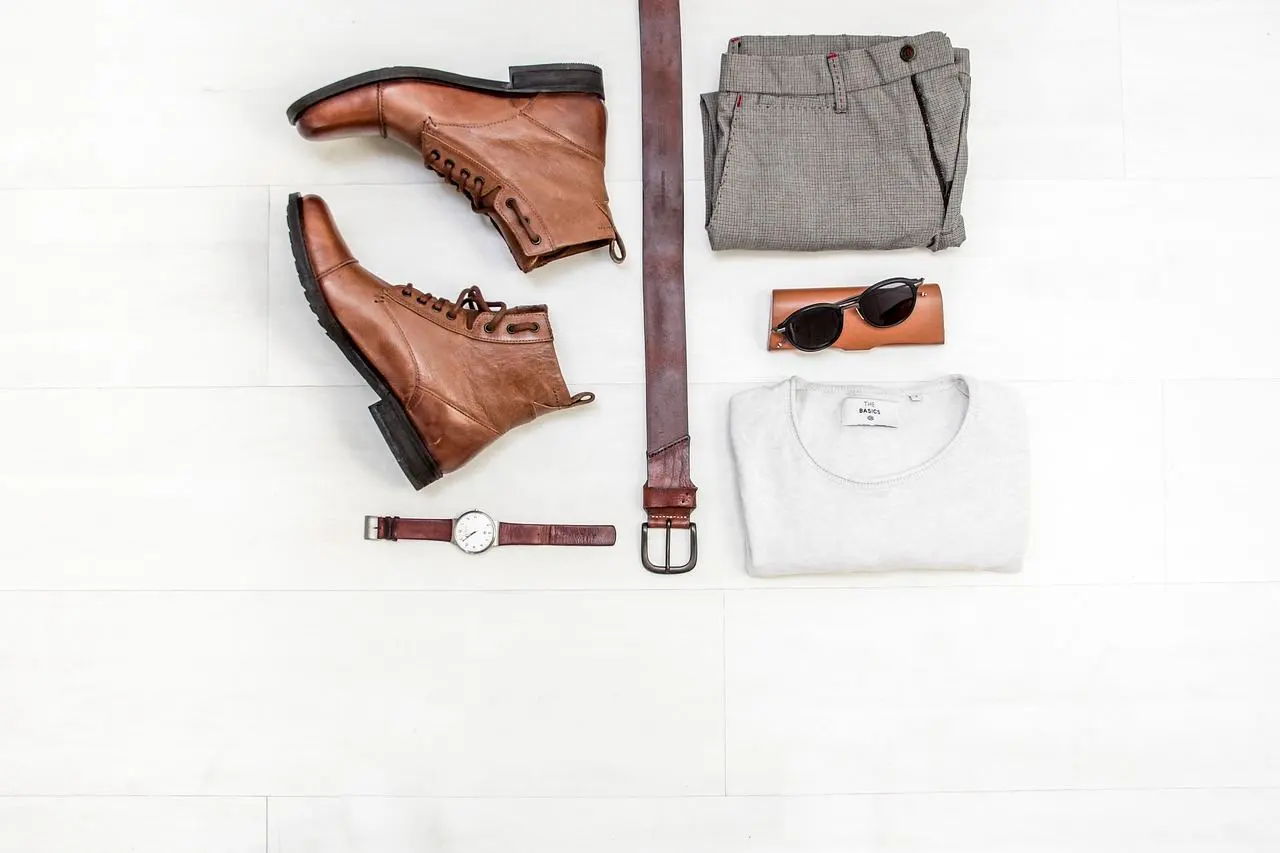

Not sure how to choose a watch that actually suits you? Start with your wrist and lug-to-lug length, then match thickness and style to where you wear it. Try it on before you buy.
This guide sits within our fashion accessories section, which covers the pieces that finish an outfit.
| Item | Value |
|---|---|
| Typical diver case diameter | 39-42mm |
| Sweet spot for sports watches | 40mm |
| Wrist size that suits a 36mm to 42mm case | 6.5 to 7.5 inches |
| Thickness of a chunky GMT watch | About 15mm |
| Lug width on many modern 40mm watches | 20mm |
These figures come from Analog:Shift’s sizing guide and Bob’s Watches’ size guide. Sizing figures can change, so check the sources before you rely on them.
Start with your wrist, not the size chart
A tape measure beats any chart. Bob’s Watches says to measure just below the wrist bone, where the watch will actually sit, and Teddy Baldassarre’s guide notes you can simply wrap a tape around the wrist’s circumference.
Analog:Shift says most men have a wrist in the roughly 6-8 inch range in circumference. That number will influence what you pick.
No tape at hand? The method from Bob’s Watches still works with a paper strip:
- Cut a strip of paper about half an inch wide, or use a piece of string.
- Wrap it around your wrist just below the wrist bone and mark where the end overlaps.
- Lay the strip flat against a ruler and read the length.
Measure again later in the day if you can, because wrist size can vary, especially in warm weather. A watch sized to a morning wrist may feel tighter by dinner, so allow for that when you try one on, as Bob’s Watches warns.
What case diameter suits you?
According to Bob’s Watches, most wrists between 6.5 and 7.5 inches can accommodate a 36mm to 42mm case. The same guide stresses that the right fit depends on more than the number on the dial.
Tastes shift over time. Analog:Shift notes that early in the last century 31 to 33mm cases were common, 36mm counted as large and 40mm was positively enormous. Today it calls 40mm the sweet spot for sports watches, with sizes in general trending back below 40mm.

Sales point the same way: Bob’s Watches reports that 40mm and 41mm cases were its most popular sizes in 2026, with smaller cases gaining share. Popular is not the same as right for you, though.
Analog:Shift gives a rough guide by watch type:
- Divers typically sit in the 39-42mm range.
- Chronographs larger than 40mm are frequently encountered.
- Dress watches are generally not quite as wide as sport watches, and rectangular dress watches are often much less wide.
Size also has no gender. Bob’s Watches calls the old habit of steering women toward a 28mm or 31mm case by default outdated advice, and says to buy the size that looks right on your wrist.
Why lug-to-lug and thickness matter
Analog:Shift calls lug-to-lug perhaps the most important measurement, because it decides whether a watch will overhang your wrist bones. The rule of thumb from Bob’s Watches is that the lugs should sit within the flat of your wrist.
That is why a modest diameter can still wear big. Kapoor Watch Co. points out that long, straight lugs can significantly enlarge a watch’s presence, and suggests smaller wrists suit lug-to-lug measurements around 45-46 millimetres.
Don’t confuse it with lug width, which is the strap size. Bob’s Watches says people mix the two up all the time. Analog:Shift adds that bigger watches generally have wider lugs, and lists 20mm for many modern 40mm watches.
Then there is case thickness. Analog:Shift says an ultra-thin dress watch can be just a handful of millimeters thick, while a chunky GMT might be closer to 15mm. Each build brings trade-offs:
- A slim case slides under a shirt cuff with ease.
- A thicker case often brings better water resistance, which suits sports use.
- A thick watch more easily hangs up on things around you.
Match style to the occasion
The rules are looser than they used to be. Kapoor Watch Co. argues the only rule that matters is that there are none, and says you are free to wear a heavyweight diver’s watch to a boardroom meeting or a petite dress watch to Sunday brunch.
Still, a few habits help. Analog:Shift sums it up as the dressier the watch, the thinner it often is, and says that with a dress shirt, suit or tuxedo you would ideally like the watch to disappear under your cuff.
- Office and formal: a slim, dressier case that slides under the cuff.
- Weekends and travel: a sturdier sport case, accepting a little extra thickness.
- Everyday: a mid-size case, as long as the lugs stay within the flat of your wrist.
Proportion counts too. Shinola’s size guide says a watch looks unproportional when the size is off, because the human eye is trained to spot proportion.
If you are planning the rest of the outfit, our guides on how to style a belt bag and how to style a scarf cover ideas that sit comfortably alongside a watch.
A quick checklist before you buy
Analog:Shift advises trying a watch on first, so the diameter feels comfortable and suits how you will use it. When you can’t, Teddy Baldassarre says a caliper is needed to measure case diameter if the maker or retailer doesn’t list it.
- Measure your wrist just below the wrist bone, snug but not tight.
- Check lug-to-lug against the width of your wrist, so the lugs don’t overhang.
- Check thickness against the cuffs you wear most.
- Note the lug width if you plan to change straps.
- Try the watch on, and compare how it looks as well as how it feels.
Frequently asked questions
Do men’s and women’s watches come in different sizes?
Show answer
Not in any way that should limit you. Kapoor Watch Co. cites a report that 61.7% of female buyers in 2023 chose watches traditionally labelled as men’s.
How snug should a bracelet be?
Show answer
Size it for comfort rather than to the skin. Bob’s Watches warns that a bracelet fitted exactly to your wrist will feel tight by the afternoon.
Can I buy a watch online without trying it on?
Show answer
You can, but careful measuring has to stand in for the fitting room. Teddy Baldassarre’s guide calls trying on the easiest and most sensible way to judge size, so online buyers must lean on research instead. Compare the listed lug-to-lug with your wrist before you order.
Can I wear a big watch on a slim wrist?
Show answer
Personal taste can win. Teddy Baldassarre notes that some slender-wristed people like a big, attention-grabbing timepiece. Kapoor Watch Co. adds that a larger case with short, downward-curving lugs may be surprisingly compact.